Bashar Al-Assad and Crimes Against Humanity: Unpacking the Allegations and Global Calls for Justice in Syria
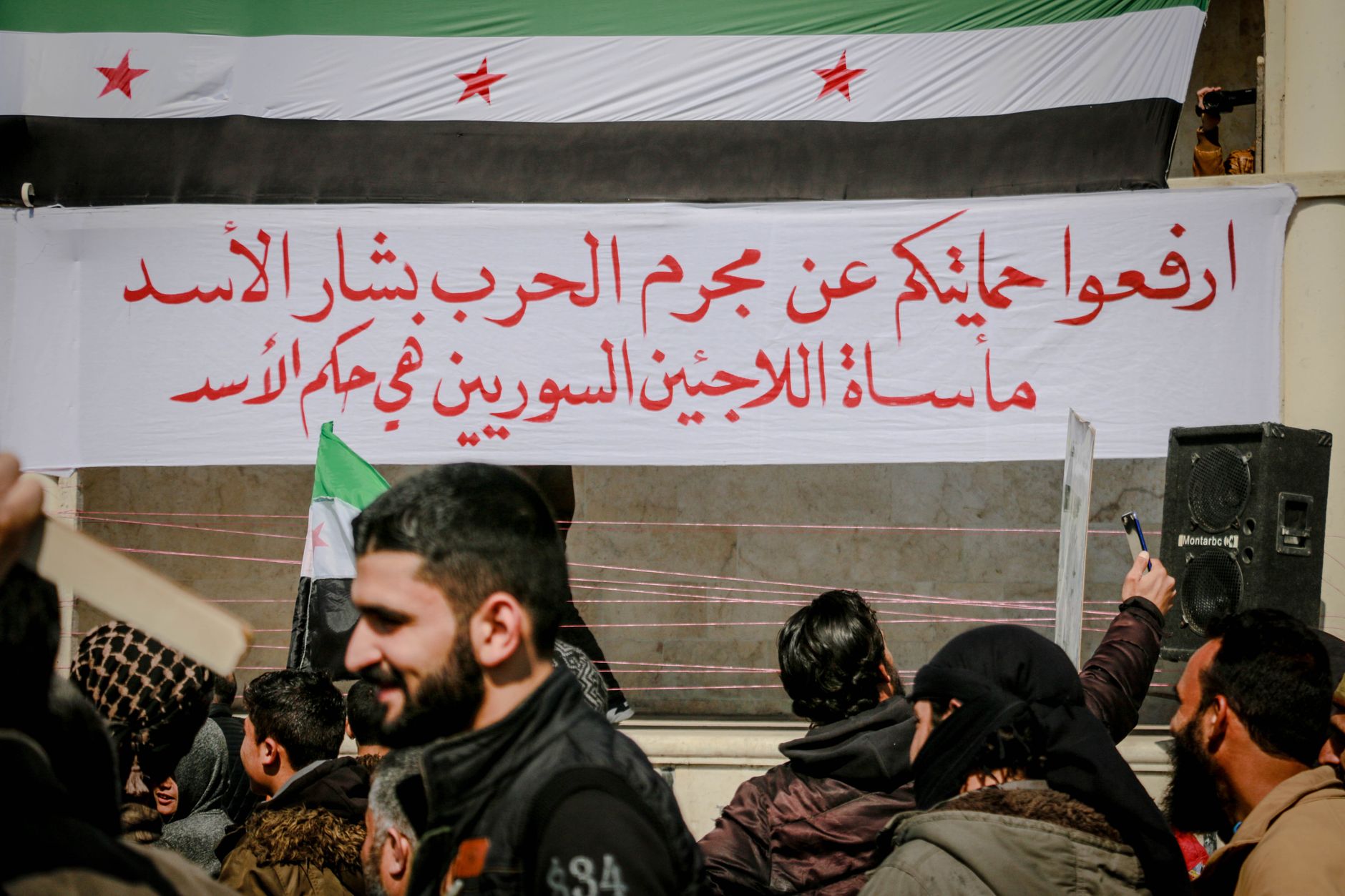
Namaste everyone, and welcome to a crucial discussion on a topic that weighs heavily on the global conscience. You see, when we talk about international justice and accountability for grievous crimes, the Syrian conflict and the name Bashar Al-Assad inevitably come up. There's been a lot of discourse, and sometimes, misinformation, swirling around. It's essential we clear the air and understand the real situation on the ground, especially concerning Bashar Al-Assad and crimes against humanity.
Before we dive in, let's address something critical right off the bat. There's been a misconception circulating about a 'live news update' stating Syria's President, Bashar Al-Assad, has been 'sentenced to death for crimes against humanity.' To be absolutely clear, as per all verifiable international legal records and news sources, this specific claim is not accurate. While there are indeed widespread, deeply troubling allegations of atrocious crimes committed under his regime, and significant international efforts to bring accountability, no international court or body has, at present, delivered a 'death sentence' for Bashar Al-Assad. Our aim today is to discuss the actual situation: the serious allegations, the tireless pursuit of justice, and the monumental challenges involved in holding powerful figures accountable for such horrific acts. It's a complex tapestry, full of legal nuances and geopolitical roadblocks, but understanding it is key to advocating for true justice.
The Shadow of Allegations: What Are the Core Charges Against Bashar Al-Assad?
The Syrian conflict, which began in 2011, has tragically claimed hundreds of thousands of lives and displaced millions. Amidst this devastation, numerous international bodies, human rights organisations, and investigative journalists have meticulously documented a litany of horrific crimes attributed to the Syrian government forces, led by Bashar Al-Assad. These aren't just minor infractions, mind you; we're talking about actions that shock the conscience of humanity.
Key Allegations Include:
- Crimes Against Humanity: This is a broad category, but it essentially covers widespread or systematic attacks directed against any civilian population. In Syria's context, this includes mass killings, torture, enforced disappearances, sexual violence, and other inhumane acts. Think about the systematic targeting of civilians, the sieges that cut off entire cities from food and medicine, or the arbitrary detention and subsequent torture of dissenters. It's truly harrowing.
- War Crimes: When a conflict is ongoing, certain rules of engagement are supposed to be followed, even in wartime. Violations of these rules – like attacking hospitals, using prohibited weapons, or targeting non-combatants – fall under war crimes. The alleged use of chemical weapons, particularly the Ghouta attack in 2013 and the Khan Sheikhoun attack in 2017, stand out as particularly egregious examples here.
- Chemical Weapons Use: This is a particularly grave accusation, as the use of chemical weapons is strictly prohibited by international law. Multiple reports from the UN and OPCW (Organisation for the Prohibition of Chemical Weapons) have implicated the Syrian regime in several chemical attacks, causing immense suffering and death.
- Targeting Civilian Infrastructure: Hospitals, schools, bakeries – these are places that should be safe, even in conflict zones. Yet, there are extensive reports of these civilian structures being deliberately targeted, disrupting essential services and exacerbating the humanitarian crisis.
These allegations are not just whispers; they are backed by mountains of evidence, survivor testimonies, satellite imagery, and forensic analysis. Organizations like the UN's International, Impartial and Independent Mechanism (IIIM) for Syria are dedicated to collecting and preserving this evidence, hoping one day it can be used in a court of law.
The Uphill Battle: Why is Prosecuting Bashar Al-Assad So Challenging?
If the evidence is so compelling, you might wonder, why hasn't justice been served? This is where the complexities of international law, national sovereignty, and global politics truly come into play. It's not a straightforward path, believe me.
1. Sovereign Immunity for Heads of State:
One of the biggest hurdles is the concept of sovereign immunity. Historically, sitting heads of state have enjoyed immunity from prosecution in foreign courts. While this immunity isn't absolute, especially for international crimes, it still presents a significant legal and political barrier. Getting a sitting president, especially one backed by powerful allies, into a courtroom is an immense task.
2. Syria is Not a Member of the ICC:
The International Criminal Court (ICC) in The Hague is the primary body for prosecuting individuals for genocide, war crimes, crimes against humanity, and the crime of aggression. However, the ICC only has jurisdiction over crimes committed in the territory of a state that has ratified the Rome Statute (the treaty establishing the ICC) or when a situation is referred to it by the UN Security Council. Syria has not ratified the Rome Statute. This means the ICC cannot automatically investigate crimes committed in Syria.
3. The UN Security Council Deadlock:
This is perhaps the most frustrating aspect. For the ICC to get jurisdiction over Syria, the UN Security Council (UNSC) would need to refer the situation. But as you know, the UNSC has five permanent members with veto power: China, France, Russia, the United Kingdom, and the United States. Russia and China, both allies of the Syrian regime, have repeatedly used their veto power to block resolutions that would refer the Syrian situation to the ICC. This effectively creates a judicial vacuum, making it almost impossible for the ICC to act.
4. Lack of Political Will and Enforcement:
Even if charges were brought, enforcing them requires immense political will and cooperation from states. Arresting a sitting head of state is not something that can happen without significant international consensus and, often, military force, which comes with its own set of dangers and complexities.
Comparing Avenues for Justice: Where Can Accountability Be Sought?
Despite the formidable obstacles, various legal avenues are being explored and pursued to bring justice for the victims of the Syrian conflict. It's like trying to find different routes to the same destination when the main highway is blocked.
| Legal Avenue | Description | Applicability to Syria | Challenges |
|---|---|---|---|
| International Criminal Court (ICC) | A permanent international court with jurisdiction over genocide, war crimes, crimes against humanity, and aggression. Prosecutes individuals. | Cannot directly act as Syria is not a member state and a UN Security Council referral is blocked by vetoes. | Requires UNSC referral; lack of Syrian ratification; immunity issues for sitting heads of state. |
| Universal Jurisdiction | Allows national courts to prosecute individuals for certain serious international crimes (like war crimes, crimes against humanity) regardless of where the crime was committed or the nationality of the perpetrator/victim. | Several European countries (e.g., Germany, France, Sweden) have opened investigations and prosecuted low-ranking Syrian officials based on this principle. Cases against high-ranking officials/Assad are legally more complex but theoretically possible. | Limited to specific national courts; difficult to arrest high-ranking officials outside their territory; political sensitivities; resource-intensive investigations. |
| Ad Hoc Tribunals (e.g., ICTY, ICTR) | Temporary courts established by the UN Security Council to prosecute crimes committed during specific conflicts (e.g., Yugoslavia, Rwanda). | Requires a UN Security Council resolution, which, again, is likely to be vetoed by Russia/China for Syria. | Requires UNSC consensus; temporary nature; focuses on specific conflicts. |
| Hybrid Courts | Courts combining international and national legal elements, often set up in post-conflict states to deal with mass atrocities. | Not currently feasible given the ongoing conflict and the current regime's control in Syria. Would require significant political transition. | Requires significant political will and cooperation from host state; difficult to establish during ongoing conflict. |
| International, Impartial and Independent Mechanism (IIIM) | Mandated by the UN General Assembly to collect, consolidate, preserve, and analyse evidence of serious international crimes committed in Syria, and to prepare files for prosecution. | Actively collecting and preserving evidence, playing a crucial role in building future cases for any competent court that might eventually have jurisdiction. This is a vital precursor to future justice. | Does not have prosecutorial powers itself; merely prepares cases for other courts. Its success depends on eventual judicial avenues opening up. |
Why Pursuing Accountability for Bashar Al-Assad Matters: More Than Just Punishment
It's not just about punishing one individual, no. The pursuit of justice for Bashar Al-Assad and crimes against humanity holds much deeper significance, extending far beyond the courtroom. It's about setting precedents, offering solace, and building a better future.
1. For the Victims and Survivors: For those who have lost loved ones, endured torture, or been displaced, the thought of justice offers a glimmer of hope. It validates their suffering and acknowledges that what happened to them was wrong, not just a tragic consequence of war. It's about restoring their dignity, you know?
2. Upholding International Law: If leaders can commit mass atrocities with impunity, it erodes the very foundations of international law and human rights. Pursuing accountability reinforces the principle that no one, however powerful, is above the law. It sends a message that such crimes will not be tolerated.
3. Deterrence for Future Atrocities: While not a perfect deterrent, the prospect of future prosecution can, in theory, make other potential perpetrators think twice. When there's a real chance of facing justice, it might just tip the scales towards restraint.
4. Historical Record and Preventing Revisionism: Documenting these crimes and holding individuals accountable ensures that the truth is established for posterity. It prevents historical revisionism and denial, ensuring that future generations understand the gravity of what transpired.
5. Facilitating Reconciliation and Healing: While difficult during an ongoing conflict, accountability is often a crucial precursor to genuine reconciliation in post-conflict societies. It helps societies come to terms with their past and move forward on a foundation of truth.
Why International Cooperation is Crucial for Justice in Syria
Given the monumental challenges, it becomes abundantly clear that individual nations, however powerful, cannot achieve justice alone. This is a global problem requiring a global solution. International cooperation isn't just a nice-to-have; it's absolutely essential.
1. Pooling Resources and Expertise: Investigations into complex international crimes require vast resources, forensic expertise, and legal knowledge. Sharing these resources across nations and international bodies makes the task more manageable and effective.
2. Overcoming Jurisdictional Barriers: As we've seen, national courts have limitations. By cooperating, states can leverage principles like universal jurisdiction, exchange evidence, and potentially even coordinate arrests or extradition requests more effectively.
3. Amplifying Political Pressure: A united international front exerts far greater political pressure on regimes and their allies than fragmented efforts. This collective voice is essential to push for UN Security Council reform or alternative pathways to justice.
4. Evidence Sharing and Witness Protection: Many witnesses and survivors of Syrian atrocities are now refugees in different countries. International cooperation is vital for securely gathering their testimonies, protecting them, and ensuring their evidence can be used in various legal contexts without compromising their safety.
5. Developing Innovative Legal Approaches: The unique challenges of the Syrian conflict have spurred legal minds to think creatively about accountability. International collaboration fosters the development of new legal strategies and mechanisms to navigate these unprecedented obstacles.
Common Obstacles and Misconceptions in Prosecuting Atrocity Crimes
Navigating the legal landscape for atrocity crimes is like walking through a minefield; there are many pitfalls and misunderstandings along the way. Let's debunk a few common ones related to Bashar Al-Assad and crimes against humanity.
1. Misconception: 'If there's no ICC trial, there's no justice.'
- Reality: While the ICC is the ideal forum for many, it's not the only route. Universal jurisdiction cases in national courts are proving to be powerful alternatives, and mechanisms like the IIIM are diligently laying the groundwork for future prosecutions, whenever and wherever they may occur. Justice can take many forms and paths.
2. Misconception: 'It's all about victor's justice.'
- Reality: International law strives for impartial justice, applying the same standards to all parties in a conflict. While powerful states can sometimes shield allies, the ideal of international justice is about upholding universal norms, not just prosecuting the losing side. The evidence collection by independent bodies aims to ensure this impartiality.
3. Misconception: 'Prosecuting Assad will destabilize the region further.'
- Reality: This is a complex argument. Some believe that removing a dictator could lead to a power vacuum or further chaos. However, others argue that continued impunity fuels grievances, perpetuates cycles of violence, and makes long-term stability impossible. The debate about 'peace vs. justice' is perennial, but many believe that there can be no lasting peace without justice.
4. Misconception: 'Leaders are immune from all prosecution.'
- Reality: While sitting heads of state generally enjoy immunity from prosecution in foreign national courts, this immunity does not apply to international crimes before international courts like the ICC (if jurisdiction is established) or in certain universal jurisdiction cases once they leave office. The legal landscape here is evolving, but the trend is towards greater accountability for atrocity crimes.
Expert Insights: Navigating the Complexities of International Justice
For those invested in seeing justice served in Syria, understanding these complexities is paramount. Here are a few "pro tips" or insights from the world of international law and human rights advocacy, especially pertinent to the case of Bashar Al-Assad and crimes against humanity:
1. The Power of Documentation: Never underestimate the importance of meticulous documentation. Every piece of evidence, every witness testimony, every photograph or video clip, contributes to building an irrefutable case. Organizations like the IIIM are vital in this regard. Supporting them indirectly is a way to contribute.
2. Universal Jurisdiction as a Game Changer: Keep an eye on universal jurisdiction cases. While they might seem small-scale, prosecuting lower-level officials sets precedents, builds legal expertise, and keeps the pressure on. These cases often reveal crucial details that can connect to higher-ranking officials.
3. Advocacy for UNSC Reform: The deadlock at the UN Security Council is a major impediment. Advocating for reform, particularly concerning the veto power in cases of mass atrocities, is a long-term but crucial goal for international justice advocates. It's a huge ask, but necessary.
4. Beyond Traditional Courts: Think broadly about accountability. This isn't just about criminal trials. It also includes truth commissions, reparations for victims, and institutional reforms to prevent future abuses. A holistic approach is often more effective in addressing the multifaceted harms of conflict.
5. Sustained Public Pressure: Global public awareness and sustained pressure on governments are critical. When the world remembers and demands justice, it keeps the issue alive on the political agenda and encourages states to explore new avenues for accountability. Don't let the narrative fade.
The Human Cost: Real-Life Scenarios and Stories of Resilience
While we delve into legal frameworks and political hurdles, it's crucial never to lose sight of the human element. The numbers are staggering, but behind each statistic is a person, a family, a shattered life. Imagine a family in Aleppo, their home destroyed, a loved one lost to a barrel bomb. Or a young man, arbitrarily detained and tortured, now bearing scars both visible and invisible, struggling to rebuild his life in a refugee camp in a foreign land.
These aren't abstract concepts; these are the harsh realities faced by millions of Syrians. Stories of courage, resilience, and the unwavering hope for justice emerge even from the darkest corners. People like Caesar, a former Syrian military photographer who smuggled out tens of thousands of gruesome photos documenting torture and killings, have risked everything to ensure the truth comes out. Their bravery fuels the global pursuit of accountability for Bashar Al-Assad and crimes against humanity, reminding us why this fight is so important.
The Syrian Network for Human Rights, the Syrian American Medical Society, and countless other local and international organizations work tirelessly to document abuses, provide aid, and advocate for victims. Their efforts are the bedrock upon which future justice will be built.
FAQs: Answering Your Burning Questions About Syrian Justice
Related Stories
- India's Delhi reports spike in H1N1 cases: media: Ultimate Guide, Latest Updates, and Key Insights
- EXCLUSIVE: Ram Gopal Varma’s Police Company full cast revealed; Director reunites with his Satya actors: Ultimate Guide, Latest Updates, and Key Insights
- China’s media slams India’s move of formally naming 27 places in Arunachal Pradesh: Ultimate Guide, Latest Updates, and Key Insights
- ‘For now, I am the captain’: Shaheen Afridi responds to Babar Azam captaincy reports ahead of 2027 ODI Wo: Ultimate Guide, Latest Updates, and Key Insights
- 'Put Differences Aside': Pakistan Asks Muslim Nations To Join 'Islamic NATO': Ultimate Guide, Latest Updates, and Key Insights
External Sources
Frequently Asked Questions
Has Bashar Al-Assad been officially sentenced to death by an international court?
No, this is a pervasive piece of misinformation. As of now, Bashar Al-Assad has not been officially sentenced to death by any international court or body for crimes against humanity. While there are extensive allegations and calls for his prosecution, no such sentence has been delivered.
What are the specific crimes alleged against Bashar Al-Assad and his regime?
The primary allegations include crimes against humanity (such as mass killings, torture, enforced disappearances, and sexual violence), war crimes (like targeting civilians, attacking hospitals, and illegal weapons use), and specifically, the use of chemical weapons against civilian populations.
Why is it so difficult to bring Bashar Al-Assad to justice through international courts?
The main challenges include his sovereign immunity as a sitting head of state, Syria not being a member of the International Criminal Court (ICC), and crucially, the repeated use of veto power by Russia and China in the UN Security Council to block any referral of the Syrian situation to the ICC.
What is 'universal jurisdiction' and how is it being used in Syrian cases?
Universal jurisdiction is a legal principle allowing national courts to prosecute individuals for severe international crimes (like war crimes or crimes against humanity) regardless of where the crime occurred or the nationality of the perpetrator/victim. Several European countries are using this principle to investigate and prosecute lower-ranking Syrian officials found on their soil.
What role does the UN's IIIM play in documenting Syrian atrocities?
The International, Impartial and Independent Mechanism (IIIM) for Syria is mandated by the UN General Assembly to collect, preserve, and analyze evidence of serious international crimes committed in Syria. While it doesn't have prosecutorial powers itself, it prepares comprehensive case files to be used by any competent court that may eventually have jurisdiction.
Discussion (0)
No comments posted yet. Start the conversation below!
Leave a Reply