NASA Launches $4.3bn Roman Telescope to Uncover Universe’s Hidden Secrets: A New Era of Cosmic Discovery
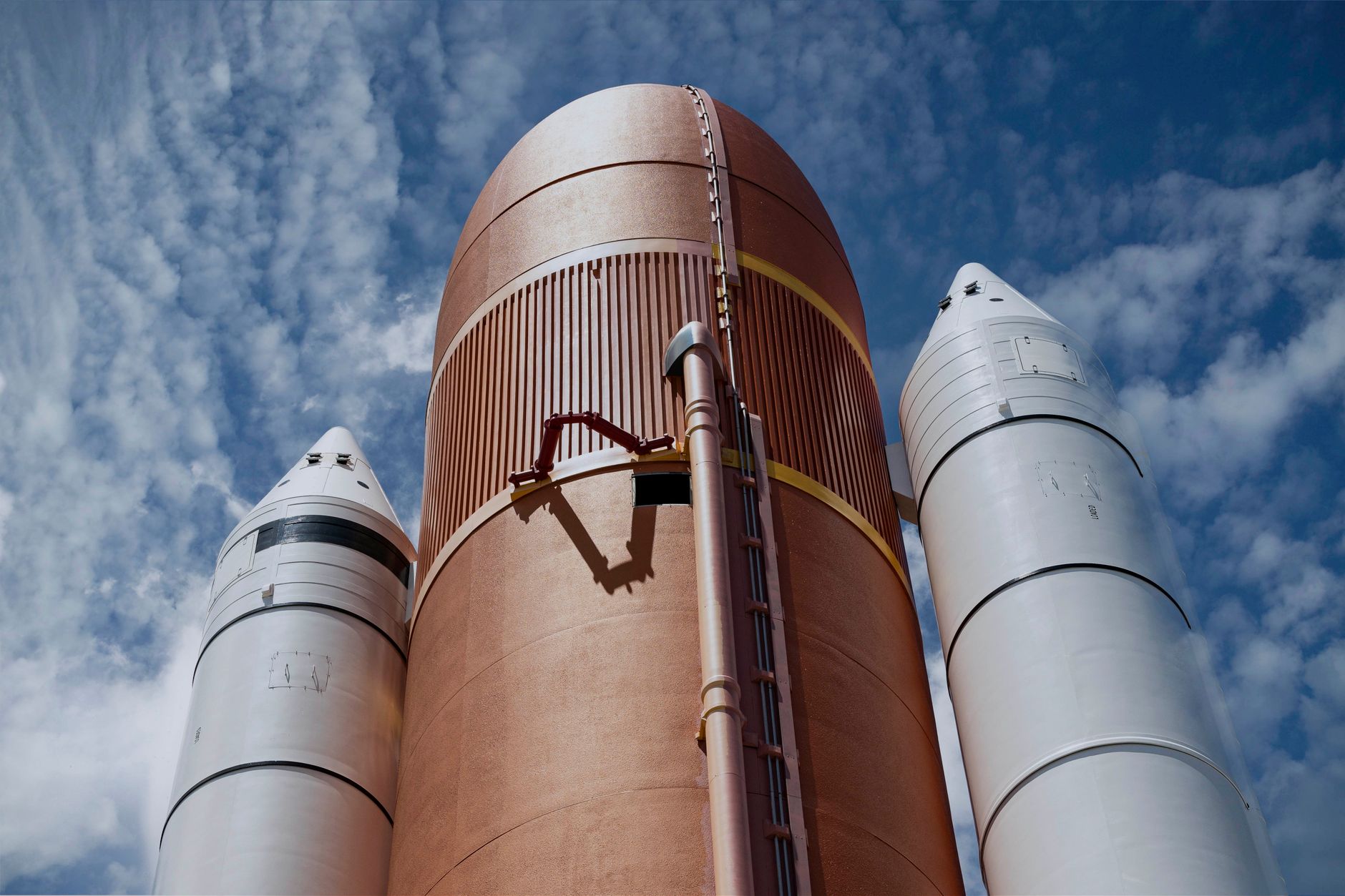
NASA Launches $4.3bn Roman Telescope to Uncover Universe’s Hidden Secrets: A New Era of Cosmic Discovery
Ever looked up at the night sky, especially away from city lights, and felt that deep sense of wonder? That feeling of being a tiny speck in an unimaginably vast universe, with so many questions buzzing in your head? "What's out there? Are we alone? How did it all begin?" Well, my friends, for decades, humanity has been relentlessly trying to answer these very questions, pushing the boundaries of what we know.
Here's the problem: despite incredible progress, a staggering 95% of our universe remains a mystery. We're talking about enigmatic dark matter and the even more perplexing dark energy – invisible forces shaping the cosmos. Plus, spotting planets outside our solar system, especially those that might host life, is like finding a needle in a cosmic haystack, often hidden by their bright host stars. But don't you worry, because NASA has a truly spectacular solution up its sleeve, or rather, ready for launch: the NASA launches $4.3bn Roman Telescope to uncover universe’s hidden secrets, and trust me, this isn't just another telescope; it's a game-changer, poised to redefine our understanding of the cosmos. This mission is set to be one of the most significant strides in astrophysics this decade, promising to bring us closer to the universe's most profound truths.
What Exactly is the Roman Space Telescope?
So, what's all the buzz about? The Nancy Grace Roman Space Telescope, or simply the Roman Telescope (formerly known as WFIRST, the Wide Field Infrared Survey Telescope), is NASA's next-generation observatory, designed to tackle some of the biggest cosmic conundrums. Imagine a telescope with the same crisp vision as the iconic Hubble, but with a field of view that's a hundred times wider! It’s like switching from looking through a tiny keyhole to staring out a massive panoramic window at the universe. This powerful instrument is budgeted at a whopping $4.3 billion, a testament to its ambitious goals and cutting-edge technology.
A Glimpse into its Powerful Lenses: Wide Field and Infrared Capabilities
At its heart, the Roman Telescope boasts a 2.4-meter primary mirror, identical in size to Hubble's. But here's where it truly stands apart: its Wide Field Instrument (WFI). This instrument is designed to capture enormous swathes of the sky in a single go, particularly in infrared light. Why infrared, you ask? Because infrared light can pierce through cosmic dust and gas clouds that obscure visible light, allowing us to see fainter, more distant objects – essentially peering further back in time to the early universe. It’s like having special glasses that let you see through fog!
This wide-field, infrared capability means it can survey vast regions of space much faster and more efficiently than any previous telescope. Think about mapping an entire city block in a single photograph, rather than taking hundreds of individual shots. This efficiency is crucial for building massive cosmic maps that will help scientists understand the large-scale structure of the universe and how it has evolved over billions of years. Truly, a marvel of engineering and scientific ambition.
The Coronagraph: Hunting for Habitable Worlds
Now, here's another jaw-dropping feature: the Coronagraph Instrument. This piece of technology is revolutionary because it's designed to directly image exoplanets – planets orbiting stars other than our Sun. Normally, the blinding glare of a star makes it nearly impossible to see the faint light reflected from an orbiting planet, much like trying to spot a firefly next to a lighthouse. The coronagraph cleverly blocks out the star's light, allowing the faint light from the planet to become visible.
This isn't just about spotting dots in space; it's about studying their atmospheres to look for signs of life. Imagine finding a planet with oxygen or methane – gasses often associated with biological processes! This could be a giant leap in answering the age-old question: "Are we alone in this universe?" The Coronagraph Instrument is a technological marvel that could pave the way for future missions dedicated solely to finding and characterizing potentially habitable exoplanets.
Why the Name "Roman"? A Tribute to a Visionary
The telescope is named in honor of Dr. Nancy Grace Roman, a pioneering astronomer who was instrumental in establishing NASA's space astronomy program. Often called the "Mother of Hubble," Dr. Roman was the first Chief of Astronomy in NASA's Office of Space Science, and her tireless efforts laid the groundwork for many of the space telescopes we cherish today, including the Hubble Space Telescope. Naming this next-gen observatory after her is a fitting tribute to her incredible legacy and her unwavering vision for exploring the cosmos. She truly believed in the power of looking beyond our immediate reach, and the Roman Telescope embodies that spirit perfectly.
The Cosmic Mysteries It Aims to Solve: Uncovering the Universe’s Hidden Secrets
This isn't just a fancy camera in space; it's a dedicated detective, dispatched to solve the universe's most perplexing cold cases. From the fabric of spacetime itself to the very existence of alien worlds, Roman is geared up for some serious cosmic sleuthing. Let's dive into the core mysteries it’s set to unravel.
Unmasking Dark Energy and Dark Matter
Ah, the biggest enigmas! Dark energy and dark matter collectively make up about 95% of the universe, yet we can't directly observe them. We only know they exist because of their gravitational effects. Dark matter acts like an invisible glue, holding galaxies together, while dark energy is the mysterious force accelerating the expansion of the universe. It’s like you’re watching a movie, but 95% of the screen is blank, and you only see fleeting glimpses of characters interacting. How frustrating, right?
Roman will tackle these mysteries using several methods:
- Weak Gravitational Lensing: This involves precisely measuring the shapes of millions of distant galaxies. Dark matter subtly warps the fabric of spacetime, bending the light from these galaxies, making them appear distorted. By meticulously mapping these distortions across vast cosmic distances, Roman can create a 3D map of dark matter distribution and track its evolution. This will give us crucial clues about its nature.
- Baryon Acoustic Oscillations (BAO): These are 'frozen' sound waves from the early universe, imprinted on the distribution of galaxies today. Imagine ripples in a pond that have somehow been fixed in place. By accurately measuring the scale of these ripples, Roman can determine how the universe has expanded over time, directly shedding light on the properties of dark energy. This is a bit like using a cosmic ruler to measure the expansion rate.
- Type Ia Supernovae: These are incredibly bright, exploding stars that act as 'standard candles' – meaning they all have roughly the same intrinsic brightness. By observing how bright they appear to us, astronomers can measure their distance, and by extension, the expansion rate of the universe at different epochs. Roman’s wide field will allow it to discover thousands of these supernovae, providing a treasure trove of data to refine our understanding of dark energy.
The Exoplanet Frontier: Are We Alone?
This is perhaps the most exciting prospect for many, isn't it? The thought that there might be other worlds out there, perhaps even teeming with life. Roman is uniquely positioned to revolutionize exoplanet research, and it’s not just about finding them, but really getting to know them.
- Microlensing Survey: This is a fantastic technique that uses gravitational lensing. When a star (or even a planet!) passes in front of a more distant star, its gravity can temporarily magnify the light from the background star. Roman's long-duration, wide-field observations will be perfectly suited to detect these rare microlensing events, allowing it to discover thousands of exoplanets, including rogue planets not orbiting any star, and even those in orbits similar to Earth's around our Sun. This method is particularly sensitive to finding smaller, rocky planets further from their host stars.
- Direct Imaging with the Coronagraph: As we discussed, this instrument will block out starlight, enabling direct images of large exoplanets. This means we won't just infer their existence; we'll see them. More importantly, we can then analyze their atmospheric composition to search for biosignatures – chemical indicators that might suggest the presence of life. Imagine detecting significant levels of oxygen, water vapor, or methane on an alien world! That would be a headline-maker, for sure.
Tracing the Universe's Evolution: From Big Bang to Now
Understanding how the universe came to be and how it evolved into the cosmic tapestry we see today is a fundamental goal of astronomy. Roman will play a crucial role in piecing together this grand narrative.
- Galaxy Evolution: By observing vast numbers of galaxies across huge stretches of cosmic time, Roman will help us understand how galaxies formed and evolved. We'll see galaxies in different stages of their lives, from their embryonic beginnings in the early universe to the mature spirals and ellipticals we see today. This will be like watching a sped-up movie of galaxy formation over billions of years.
- The First Stars and Galaxies: Its infrared sensitivity will allow Roman to detect the faint light from the very first stars and galaxies that formed after the Big Bang. These are incredibly distant and their light has been stretched by the universe's expansion into infrared wavelengths. By studying these primordial objects, we can gain insights into the universe's infancy and the conditions that led to the formation of everything we know.
Why is the Roman Telescope a Game-Changer? (Benefits & Features)
Arre baba, it's not just another telescope; it's a revolutionary leap! The Roman Telescope brings together several cutting-edge capabilities that make it truly unique and profoundly impactful for our understanding of the universe. It’s like having a super-fast car with incredible fuel efficiency and all the latest tech, when you were previously driving an old Ambassador!
Unprecedented Field of View: Seeing More, Faster
The most standout feature of Roman is its incredibly wide field of view. While Hubble provides exquisite detail in a tiny patch of sky, Roman will cover 100 times that area in a single observation. Imagine surveying an entire cricket stadium in one glance versus meticulously examining each blade of grass with a magnifying glass. This isn't just about efficiency; it's about being able to conduct large-scale surveys of the universe in ways previously impossible. For studying phenomena that are spread out across vast cosmic distances, like dark matter distributions or the distribution of distant galaxies, this capability is absolutely essential. It drastically cuts down the time needed to collect statistically significant data, allowing scientists to cover more ground and achieve breakthroughs faster.
Pushing the Boundaries of Infrared Astronomy
Infrared light is crucial for cosmic exploration. It allows us to see through the dust clouds that obscure visible light, revealing star-forming regions and the hearts of galaxies. More importantly, because the universe is expanding, light from very distant objects gets 'redshifted' – stretched to longer, redder wavelengths, often into the infrared spectrum. By operating primarily in infrared, Roman can peer further back in time, observing the very first stars and galaxies that formed billions of years ago, when the universe was just a toddler. It's like having night-vision goggles for the universe, allowing us to see what's otherwise hidden in the cosmic shadows.
Complementing Hubble and Webb: A Cosmic Dream Team
It’s important to understand that Roman isn't here to replace the Hubble or James Webb Space Telescopes. Instead, it's designed to complement them, forming a powerful 'dream team' for cosmic exploration. Hubble excels at visible and ultraviolet light observations with unparalleled clarity. James Webb is an infrared powerhouse, optimized for extremely deep, high-resolution observations of specific targets. Roman, with its wide-field infrared vision, will bridge the gap by conducting large-scale surveys, identifying interesting targets that Hubble and Webb can then follow up on with their focused, high-resolution observations. Think of Roman as the scout mapping the vast wilderness, while Hubble and Webb are the specialized explorers delving into specific, intriguing caves or mountains identified by the scout. Together, their capabilities create a synergy that will unlock secrets across the entire spectrum of cosmic phenomena.
Comparing Roman with its Predecessors: A Look at the Evolution of Space Telescopes
To truly appreciate what the Roman Telescope brings to the table, let's compare it with some of the other giants of space astronomy. Each telescope has its unique strengths and mission, and together, they paint an increasingly detailed picture of the cosmos.
| Feature | Hubble Space Telescope (HST) | James Webb Space Telescope (JWST) | Nancy Grace Roman Space Telescope (NGRST) |
|---|---|---|---|
| Primary Mirror | 2.4 meters (monolithic) | 6.5 meters (segmented) | 2.4 meters (monolithic) |
| Wavelength Range | Ultraviolet, Visible, Near-Infrared | Near-Infrared, Mid-Infrared | Near-Infrared |
| Field of View | Narrow (0.003 - 0.007 sq. degrees) | Very Narrow (0.00007 sq. degrees) | Very Wide (0.28 sq. degrees – ~100x Hubble) |
| Primary Mission | General-purpose astronomy, high-resolution imaging, detailed spectroscopy. | Early universe, exoplanet atmospheres, galaxy evolution, star formation. | Dark energy, dark matter, exoplanet microlensing, galaxy surveys. |
| Key Strengths | Unparalleled visible/UV clarity, long operational history. | Extreme sensitivity in infrared, ability to see earliest galaxies, detailed exoplanet atmospheric analysis. | Vast sky surveys, rapid mapping, efficient exoplanet discovery via microlensing, direct exoplanet imaging with coronagraph. |
| Operational Status | Active (launched 1990) | Active (launched 2021) | Planned Launch (Mid-2020s) |
| Cost (Approx.) | ~$16 billion (incl. servicing, upgrades) | ~$10 billion | ~$4.3 billion |
As you can see, Roman fills a critical niche with its wide-field infrared survey capabilities. It’s not about which one is 'better,' but how each instrument uniquely contributes to our collective understanding. They are specialized tools in a grand observatory toolkit.
The Journey So Far: Development, Costs, and the Road Ahead
Developing a space telescope of this magnitude is no small feat. It involves thousands of scientists, engineers, and technicians working tirelessly for years, overcoming countless challenges. The journey of the Roman Telescope has been a saga of innovation, perseverance, and significant investment.
The $4.3 Billion Investment: Why Such a Price Tag?
"Four point three billion dollars?!" you might exclaim. "That's a lot of money!" And you'd be absolutely right. But let's break down why these projects are so expensive.
- Cutting-Edge Technology: Every component, from the main mirror to the smallest sensor, is custom-designed and built to operate flawlessly in the harsh vacuum of space, exposed to extreme temperatures and radiation. This isn't off-the-shelf electronics; it's bespoke engineering at its absolute finest.
- Precision and Reliability: There's no repair crew in deep space. Once launched, the telescope has to work perfectly for years. This demands rigorous testing, redundancy, and incredibly precise manufacturing, all of which add to the cost. Even a speck of dust in the wrong place could compromise a mission.
- Years of Research and Development: Before anything is built, there are decades of theoretical physics, simulations, material science research, and prototype development. Scientists spend years refining the mission objectives and instrumentation. This intellectual capital is a huge part of the investment.
- Launch Costs: Getting a massive, delicate instrument into space is incredibly expensive. Rockets themselves are complex machines, and the launch services come with a hefty price tag, ensuring the payload reaches its designated orbit safely.
- Ground Support and Data Analysis: Once launched, a large team is needed to operate the telescope, receive and process the vast amounts of data it sends back, and conduct the scientific analysis. This support infrastructure is critical for the mission's success throughout its operational lifetime.
Considering the potential for groundbreaking discoveries – unraveling the secrets of dark energy, finding Earth-like exoplanets, and tracing our cosmic origins – this investment is seen by many as priceless for advancing human knowledge.
Challenges and Triumphs in Building a Cosmic Explorer
The road to launching a mission like Roman is paved with challenges. Scientists and engineers face everything from minute technical issues to major funding hurdles. For instance, the main mirror for Roman was originally built as a spare for a reconnaissance satellite, offering a unique opportunity to save costs and accelerate development. Adapting this mirror for a scientific mission required careful re-engineering and verification.
Developing the coronagraph, in particular, has been a triumph of engineering. This instrument requires extreme precision to block starlight by factors of a billion, demanding optics that are polished to within a few atoms of perfection and mechanisms that can adjust with astonishing accuracy. Overcoming these technical hurdles involved years of dedicated research and experimentation, pushing the boundaries of what's currently possible in optics and precision engineering.
What Happens After Launch? The Mission Phases
Once the Roman Telescope successfully launches (expected in the mid-2020s, mind you!), the real work begins. It's not just a matter of switching it on and getting instant pictures. There are several critical phases:
- Deployment and Commissioning: After reaching its operational orbit (at the Sun-Earth L2 Lagrange point, like JWST), Roman will unfold its solar panels and deploy its high-gain antenna. Then comes the crucial commissioning phase, where all instruments are powered up, tested, and meticulously calibrated. This can take several months, ensuring everything is working perfectly in the space environment.
- Survey Operations: Once commissioned, Roman will begin its primary mission. This involves executing its various sky surveys – the dark energy survey, the microlensing exoplanet survey, and general astrophysics observations. These surveys will run for years, systematically mapping vast regions of the infrared sky.
- Data Transmission and Analysis: Roman will constantly beam back massive amounts of data to Earth. This data will be processed, archived, and made available to scientists worldwide. The analysis phase, where researchers pore over the data to uncover discoveries, will continue for decades, long after the telescope has completed its operational mission.
How Does This Impact Us? (Real-life scenarios, benefits)
Some might ask, "Okay, fine, it's cool science, but how does a telescope billions of kilometers away affect my life?" Valid question! The impact might not be immediate or direct like a new smartphone, but the ripple effects of such grand scientific endeavors are profound and far-reaching.
- Inspiring the Next Generation: Just like the images from Hubble captivated a generation, Roman's discoveries will inspire countless young minds. Imagine a child seeing the first direct image of a potentially habitable exoplanet or a detailed map of dark matter. This sparks curiosity in science, technology, engineering, and mathematics (STEM), which is crucial for innovation and societal progress. Our children, perhaps even yours, might be the ones who finally unlock interstellar travel or develop technologies we can’t even dream of today, all starting with that spark of cosmic wonder.
- Technological Spin-offs: The extreme demands of space missions often lead to unexpected technological advancements that find their way into everyday life. Think of improvements in camera technology, data processing, materials science, or precision engineering. Many technologies originally developed for space exploration have found applications in medicine, consumer electronics, and environmental monitoring. The precise optics and sensor technology in Roman could lead to breakthroughs in medical imaging or advanced manufacturing, for instance.
- Perspective and Our Place in the Universe: Perhaps the most profound impact is philosophical. Each new discovery about the universe shifts our perspective. Understanding the vastness of space, the possibility of other life, or the fundamental forces at play can humble us, unite us, and make us appreciate the unique rarity of our own planet. It's about expanding our collective consciousness and realizing we're all part of something much grander.
Common Misconceptions About Space Telescopes
There are a few myths floating around about space telescopes, so let's clear them up, shall we?
- Misconception 1: Space telescopes take pictures in real-time. People often think these telescopes are like cameras snapping live photos. In reality, they collect light (often invisible to the human eye, like infrared), which is then processed, filtered, and colorized on Earth by scientists. The stunning images we see are artistic representations based on scientific data.
- Misconception 2: They just look at pretty stars. While pretty pictures are a bonus, the primary goal is scientific data. Every pixel of light intensity or spectrum measurement tells a story about temperature, composition, velocity, and distance. The 'pictures' are tools for analysis.
- Misconception 3: One telescope is enough. As we've seen with Roman complementing Hubble and Webb, no single telescope can do it all. Different missions are designed with specific scientific goals and technological strengths, working in concert to cover different wavelengths, fields of view, and depths of observation.
- Misconception 4: They are like giant binoculars. Space telescopes are highly sensitive scientific instruments, not just bigger versions of amateur telescopes. They are designed to collect faint light from extremely distant or dim objects, often over long exposure times, and operate in conditions impossible from Earth.
Pro Tips for Following Cosmic Discoveries
Want to stay updated and truly appreciate the upcoming findings from Roman? Here are a few pro tips:
- Follow Reputable Sources: Stick to official NASA channels, reputable science news outlets (like National Geographic, Scientific American, Sky & Telescope), and university astrophysics departments. Avoid sensational clickbait.
- Understand the 'Why': Don't just look at the pretty pictures. Read the explanations. Why is this galaxy important? What does this exoplanet data tell us? Understanding the scientific context enhances appreciation.
- Explore Data Archives (if brave!): Many space telescope data are publicly available. If you're technically inclined, you can even process images yourself or delve into scientific papers. This isn't for everyone, but it’s an option for deeper engagement.
- Join Online Communities: Engage with astronomy enthusiasts on platforms like Reddit (r/astronomy, r/space), or dedicated science forums. Discussing findings can deepen your understanding and connect you with fellow space lovers.
- Look Up! While Roman will show us wonders far beyond our sight, don't forget the joy of looking up at the night sky yourself. Join local astronomy clubs, attend star parties, or simply observe with your naked eye or a pair of binoculars. It keeps the connection real.
Your Burning Questions Answered: FAQs About the Roman Telescope
What is the NASA Roman Telescope?
The NASA Roman Telescope, officially known as the Nancy Grace Roman Space Telescope, is NASA's next-generation space observatory. It features a 2.4-meter primary mirror, similar to Hubble's, but with an incredibly wide field of view (100 times larger than Hubble's) and advanced infrared capabilities. It also carries a coronagraph instrument to directly image exoplanets. Its primary mission is to explore dark energy, dark matter, and discover thousands of exoplanets.
What is the main mission of the Roman Space Telescope?
The main mission of the Roman Space Telescope is to unravel the universe's most profound mysteries. This includes precisely measuring the expansion history of the universe to understand dark energy, mapping the distribution of dark matter across cosmic scales, and conducting a vast microlensing survey to discover thousands of exoplanets, including potentially habitable ones. It will also use its coronagraph to directly image large exoplanets and analyze their atmospheres.
How much did the Roman Telescope cost?
The NASA Roman Telescope has an estimated development and launch cost of approximately $4.3 billion. This significant investment covers the design, construction of cutting-edge instruments, extensive testing, launch services, and initial operational support necessary for a mission of this complexity and scientific ambition.
When is the NASA Roman Telescope expected to launch?
The NASA Roman Telescope is currently targeted for launch in the mid-2020s. While a precise date is subject to change based on development progress and launch vehicle availability, the mission is actively under construction and undergoing rigorous testing in preparation for its journey to space.
How does the Roman Telescope compare to Hubble or James Webb?
The Roman Telescope complements Hubble and James Webb rather than replacing them. While Hubble excels in visible/ultraviolet light with narrow, high-resolution views, and James Webb is optimized for deep, high-resolution infrared observations, Roman specializes in wide-field infrared surveys. It can rapidly map vast regions of the sky, discovering phenomena and targets that Hubble and Webb can then study in greater detail. Each telescope has unique strengths crucial for a comprehensive understanding of the universe.
The Future of Exploration: What's Next After Roman?
So, as we eagerly await the launch of the Roman Telescope, it's clear we're standing at the precipice of a monumental era of discovery. The insights it will provide into dark energy, dark matter, and exoplanets are not just scientific data; they are pieces of a grander puzzle, helping us understand our cosmic address and our very existence. Roman is more than a machine; it's a testament to human curiosity, ingenuity, and our relentless drive to look beyond the horizon.
With its wide-field infrared eyes and exoplanet-hunting prowess, Roman will undoubtedly reshape textbooks and ignite imaginations for generations to come. It will pave the way for future missions, perhaps even those designed to send probes to interstellar space or build even larger observatories. The universe is calling, and with instruments like Roman, we're finally getting clearer answers.
What do you think about this incredible mission? Are you excited about the potential for discovering new worlds or solving the dark energy mystery? Share your thoughts and let's keep the conversation going about our universe's hidden secrets! The journey has just begun, and it promises to be nothing short of spectacular. Jai Hind, and happy stargazing!
Related Stories
- What To Expect At September 9 Apple Event: Foldable iPhone, iPhone 18 Pro: Ultimate Guide, Latest Updates, and Key Insights
- CBI Books Subhash Chandra, Others Over Alleged ₹1,322-Crore LIC Housing Finance Loss: A Deep Dive into India's Latest Financial Probe
- Woman Comments On Sister-In-Law's Brother. Gets Killed, Body Dumped In Tank: Ultimate Guide, Latest Updates, and Key Insights
- Manipur Final Electoral Roll Adds 26,221 Electors; Kangpokpi Loses 11,471 While Ukhrul Gains 5,292: Ultimate Guide, Latest Updates, and Key Insights
- 'We eradicated Naxalism, will eliminate narcotics': Amit Shah on drug-free India by 2029: Ultimate Guide, Latest Updates, and Key Insights
Discussion (0)
No comments posted yet. Start the conversation below!
Leave a Reply