Workers Across Spain Stage First General Strike in 14 Years: Decoding the Historic Uprising
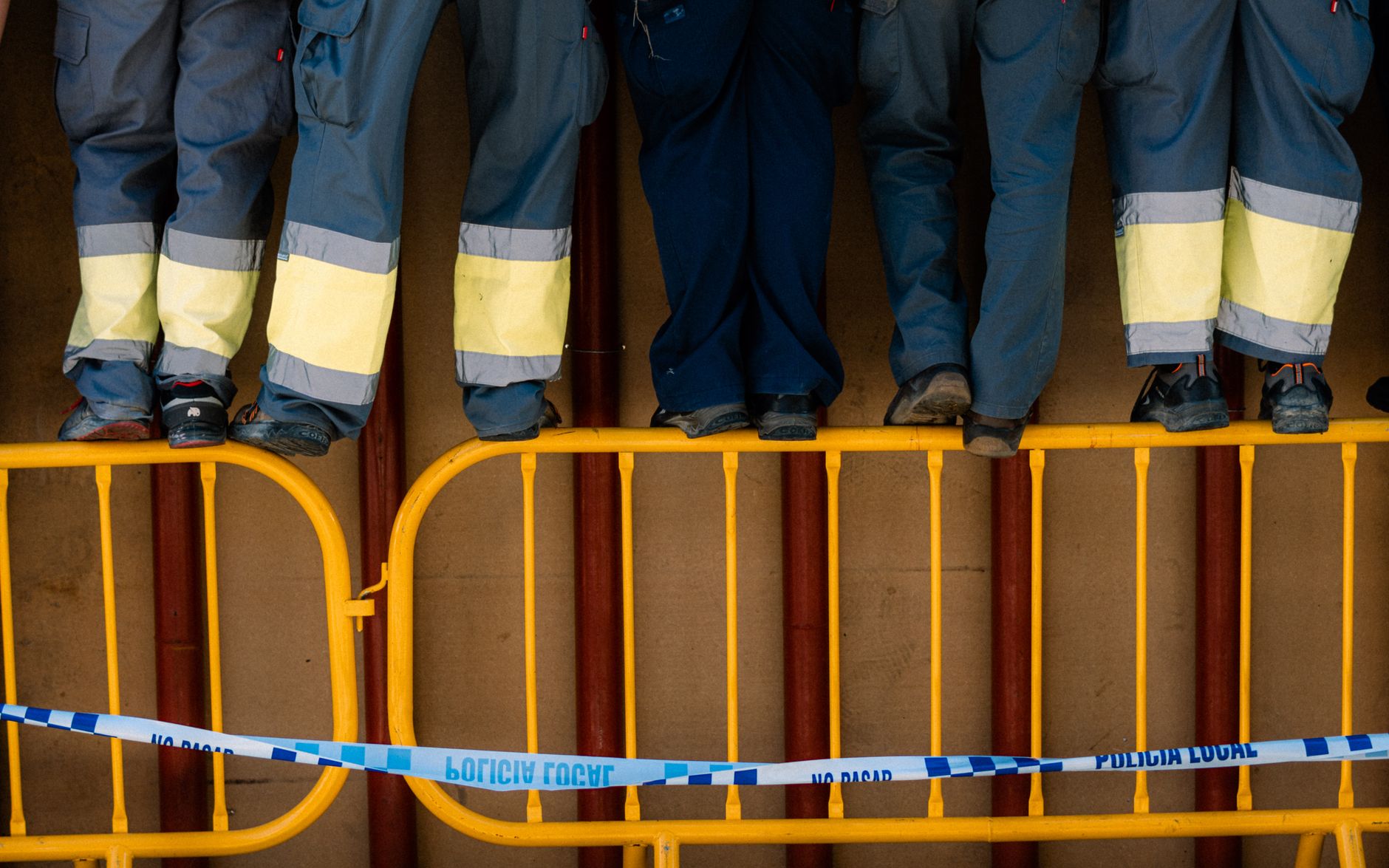
Workers Across Spain Stage First General Strike in 14 Years: Decoding the Historic Uprising
Dekho, life often throws us curveballs, right? Imagine waking up one fine morning and finding your regular commute halted, your local shop shut, and essential services running on a bare minimum. Sounds like a scene from a movie, doesn't it? But for millions in Spain, this became a very real, very tangible situation recently. Workers across Spain stage first general strike in 14 years, marking a monumental moment in the country's socio-economic landscape. This isn't just about a day off work; it's a powerful statement, a collective cry for change that has reverberated across the nation. What led to such an extraordinary display of solidarity after more than a decade? And what does it mean for the everyday lives of Spaniards, and indeed, for the future of labour relations in Europe? Let's dive deep into this historic event, understand the whys and hows, and figure out what the fuss is all about, yaar.
Why Are Workers Across Spain Staging a General Strike After 14 Years? (The Core Problem)
Basically, when workers across Spain stage first general strike in 14 years, it's not a decision taken lightly. A general strike is a big deal, involving massive coordination and personal sacrifice. It means workers are so fed up, so frustrated with the existing conditions, that they're willing to sacrifice a day's wage and disrupt their lives to make their voices heard. So, what's really cooking in Spain that led to this boiling point?
The Lingering Shadow of Austerity and Economic Discontent
Let's be honest, the global economy has been a rollercoaster for the past couple of decades. Spain, like many other European nations, was hit hard by the 2008 financial crisis. Post-crisis, a lot of austerity measures were introduced – cuts in public spending, reforms in labour laws, and a general tightening of belts. While these measures were touted as necessary for recovery, many argue they disproportionately affected the working class, leading to stagnant wages, precarious employment, and a chipping away at social safety nets.
Imagine karo, for years, you've been working hard, maybe even taking on extra shifts, but your salary just isn't keeping pace with the rising cost of living. Your rent is going up, groceries are pricier, and saving money feels like an impossible dream. This slow burn of economic discontent has been simmering for years, creating a fertile ground for widespread frustration.
The Crushing Weight of Inflation and Cost of Living Crisis
Fast forward to today, and we're grappling with another global challenge: inflation. Everything from petrol to bread seems to be getting more expensive. For the average Spanish family, this means their purchasing power is eroding rapidly. Wages, for many, haven't seen a significant bump in ages. It's like running on a treadmill – you're expending a lot of energy, but you're not really moving forward.
This cost of living crisis is a primary driver behind the current unrest. Workers are demanding better wages, not just to improve their quality of life, but simply to maintain it. It's a matter of basic dignity and economic survival, really.
Disputed Labour Reforms and Worker Rights
The Spanish government, like any other, has its own set of policies and reforms. However, some recent labour reforms have been met with strong opposition from trade unions. These reforms, often aimed at boosting economic competitiveness or simplifying regulations, are sometimes perceived by workers as undermining their rights, making it easier for companies to lay off staff, or reducing the power of collective bargaining.
When unions feel their hard-won protections are being threatened, it often galvanises a response. This strike is, in many ways, a defence of worker rights and a demand for fairer labour practices. It’s about ensuring a balance of power between employers and employees, something that's crucial for a healthy democracy and economy.
Understanding the Scale: Who All Are Involved When Workers Across Spain Stage First General Strike in 14 Years?
When workers across Spain stage first general strike in 14 years, it's not a small-scale protest. It's a massive undertaking involving multiple sectors and millions of people. It's a true reflection of the collective frustration brewing beneath the surface.
The Driving Force: Major Trade Unions
At the forefront of organising such a colossal event are Spain's largest and most influential trade unions, such as the CCOO (Comisiones Obreras) and UGT (Unión General de Trabajadores). These organisations act as the voice of millions of workers, negotiating with the government and employers, and mobilising their members for collective action.
Their role is absolutely critical in coordinating the strike, ensuring that it's impactful, and articulating the demands of the working class. Think of them as the orchestrators of this grand symphony of protest.
Widespread Sectoral Participation
One of the defining characteristics of a general strike is its broad participation across various sectors. We're not just talking about one industry; we're talking about a significant chunk of the workforce. This includes:
- Public Services: Healthcare workers (non-emergency), teachers, civil servants. Imagine schools shutting down or public administration services being unavailable.
- Transport: Buses, trains, metros, and even some air traffic control might be affected. This means major disruptions for commuters and travellers.
- Industry: Factories, manufacturing plants, and industrial complexes often see a significant slowdown or complete shutdown.
- Retail and Commerce: Many shops, especially smaller ones, might close in solidarity or due to a lack of staff.
- Other Sectors: From cleaning services to telecommunications, the ripple effect is felt across the economy.
This widespread participation is what gives a general strike its power. It highlights how interconnected society is and how much we rely on the daily efforts of countless workers.
How Does This Strike Compare to Previous Ones?
Historically, Spain has seen several general strikes, often during periods of significant economic or political upheaval. The fact that this is the first in 14 years is telling. It indicates that the current grievances are deep-seated and widely felt, perhaps even more so than specific issues that might have led to sectoral strikes in recent years. The last time such a widespread protest occurred was likely during the aftermath of the 2008 crisis, focusing on austerity measures.
This current strike, however, appears to be heavily driven by the immediate pressure of the cost of living crisis coupled with long-standing demands for fairer labour practices. The sheer scale and determination involved reflect a critical juncture for Spain.
Decoding the Demands: What Are Workers Really Asking For?
So, with so many workers across Spain stage first general strike in 14 years, what exactly are their core demands? It's not just about venting frustration; it's about pushing for concrete changes that can improve their lives. Let's break down the key asks:
1. Fair Wages to Combat Inflation
This is perhaps the most immediate and pressing demand. Workers are asking for significant wage increases that not only match but ideally surpass the current inflation rates. The goal is to restore purchasing power and ensure that families can afford basic necessities without struggling.
2. Stronger Protection of Labour Rights
Trade unions are pushing back against what they perceive as regressive labour reforms. They want stronger job security, better contracts (reducing temporary or precarious employment), and a reinforcement of collective bargaining power. It's about empowering workers and protecting them from exploitation.
3. Investment in Public Services
Many demands also extend to broader social issues, including increased investment in public healthcare, education, and social welfare programs. The argument is that a strong public sector benefits everyone, and years of underfunding have led to a decline in quality and accessibility.
4. Equitable Tax System and Corporate Accountability
There's often an underlying call for a more equitable distribution of wealth. This includes demands for fairer tax policies where larger corporations and high earners contribute more, and greater accountability for corporate practices that might negatively impact workers or the environment.
These demands aren't just isolated points; they form a comprehensive vision for a more just and sustainable society. It's about fundamental fairness, yaar.
Key Demands vs. Current Economic Realities in Spain
Here’s a snapshot of the major points of contention between the workers' demands and the prevailing economic situation or government stance. This table highlights the friction points that ultimately led to workers across Spain stage first general strike in 14 years.
| Aspect / Demand | Workers' Stance / Key Demand | Current Economic Reality / Government Stance | Impact / Consequence |
|---|---|---|---|
| Wages & Inflation | Significant wage increases (above inflation) to restore purchasing power. | High inflation (e.g., 5-10% in recent times) eroding real wages; government wary of wage-price spirals. | Reduced household spending power, increased poverty risk, social unrest. |
| Labour Rights | Stronger job security, reversal of certain labour reforms, enhanced collective bargaining. | Previous reforms aimed at flexibility and job creation; government prioritises economic competitiveness. | Precarious employment, fear of layoffs, diminished union power. |
| Public Services | Increased public investment in healthcare, education, and social welfare. | Public debt concerns, budget constraints, pressure to manage fiscal deficit. | Strain on essential services, reduced access for citizens, lower quality. |
| Taxation & Equity | More equitable tax system, higher contributions from large corporations/wealthy. | Government balancing fiscal needs with attracting investment and business growth. | Perceived unfairness in wealth distribution, calls for social justice. |
| Job Stability | Reduction in temporary contracts, promotion of permanent employment. | High youth unemployment, reliance on temporary contracts in certain sectors. | Job insecurity, limited career progression, brain drain for skilled youth. |
Why This Strike is So Significant for Spain (and Beyond)
When workers across Spain stage first general strike in 14 years, it sends a powerful message not just within its borders but across Europe and globally. This isn't just another protest; it's a barometer of deeper societal issues.
A Resurgence of Worker Power and Solidarity
In many parts of the world, union membership and strike activity have seen a decline over the decades. This general strike signals a powerful resurgence of worker power and solidarity. It reminds everyone that collective action can still be a potent tool for change, especially when individual voices feel unheard.
It's like, you know, when a group of friends stands up for one person being bullied. There's strength in numbers, and this strike embodies that principle on a national scale.
A Litmus Test for Government Policies
For the Spanish government, this strike is a major challenge. It's a litmus test of their policies and their ability to address the grievances of a significant portion of the population. How they respond will set a precedent for future labour relations and could either ease tensions or escalate them further.
It forces a re-evaluation of economic strategies and social contracts. Can the government find a way to balance fiscal responsibility with social justice? That's the million-dollar question.
Potential for Ripple Effects Across Europe
Spain is not an isolated island. Many European countries are facing similar challenges: inflation, cost of living crises, and debates over labour reforms. A successful or impactful general strike in Spain could inspire similar actions in other nations, creating a wave of industrial action across the continent.
It's like a domino effect, yaar. What happens in one country can often influence its neighbours, especially when the underlying issues are so similar.
Challenges and Misconceptions Surrounding General Strikes
Whenever workers across Spain stage first general strike in 14 years, there are always challenges and, unfortunately, a lot of misconceptions. Let's clear some of these up.
Common Misconception 1: It's Just About Being Lazy or Not Wanting to Work
Reality: This is perhaps the most unfair criticism. Workers who strike are often sacrificing a day's pay, which can be a significant hardship for families already struggling. They participate because they believe the long-term gains (better wages, fairer conditions) outweigh the short-term loss. It's a calculated risk, not laziness.
Common Misconception 2: Strikes Harm the Economy Irreparably
Reality: While strikes cause immediate economic disruption, their long-term impact is more complex. Sometimes, the disruption can force employers or governments to negotiate, leading to improved conditions that can, in turn, boost worker morale, productivity, and ultimately, the economy. Ignoring grievances can have far more detrimental long-term economic consequences, such as skilled labour shortages or prolonged social instability.
Common Misconception 3: Unions Are Just Power-Hungry
Reality: Trade unions' primary role is to represent and advocate for their members' rights and interests. While they wield significant power, this power is typically used to ensure fair treatment, safe working conditions, and equitable pay. Without unions, individual workers would often be at a severe disadvantage when negotiating with large corporations or governments.
Challenges Faced by Strikers
- Financial Strain: Losing a day's wage is tough, especially for low-income workers.
- Public Opinion: Maintaining public support is crucial, but disruptions can sometimes turn public sentiment against strikers.
- Government/Employer Pressure: Strikers often face legal challenges, threats of disciplinary action, or intense public relations campaigns aimed at undermining their cause.
- Sustaining Momentum: General strikes require immense coordination and energy to maintain momentum over time.
Expert Insights: Navigating the Aftermath and Path Forward
With workers across Spain stage first general strike in 14 years, the immediate focus shifts to what happens next. How can Spain move forward from this significant industrial action? Experts offer various perspectives on the potential resolutions and long-term implications.
The Urgency of Dialogue and Negotiation
Expert consensus often points to the critical need for immediate and constructive dialogue between the government, employers, and trade unions. Ignoring the demands or adopting a purely confrontational stance is unlikely to resolve the underlying issues and could lead to further unrest.
It's like, in any argument, yaar, if you just stop talking, nothing gets resolved, right? Both sides need to sit at the table with an open mind, willing to compromise.
The Role of Mediators and Independent Bodies
In complex situations like this, independent mediators or arbitration bodies can play a crucial role. They can help facilitate negotiations, build trust, and propose solutions that might be acceptable to all parties. Their neutrality can be invaluable in bridging divides.
Long-Term Policy Adjustments
Beyond immediate demands, experts suggest that the government might need to consider more fundamental, long-term policy adjustments. This could include a comprehensive review of wage policies, a re-evaluation of public service funding, and a commitment to protecting and strengthening labour rights. This strike isn't a one-off event; it's a symptom of deeper structural issues.
The Importance of Transparency and Communication
Transparent communication from both the government and unions is vital to keep the public informed and to manage expectations. Misinformation can easily fuel resentment and complicate resolution efforts. Clear, honest communication builds trust, even when there are disagreements.
Conclusion: A Call for Dialogue and a Stronger Spain
Yaar, the fact that workers across Spain stage first general strike in 14 years is a powerful testament to the deep-seated grievances simmering within the nation. It's not just a headline; it's a lived experience for millions, a collective voice demanding dignity, fair wages, and a more equitable society. From the crushing burden of inflation to ongoing debates about labour rights, the reasons behind this historic action are complex and multifaceted.
This strike serves as a crucial wake-up call for everyone involved – the government, employers, and society at large. It underscores the urgent need for meaningful dialogue, constructive negotiation, and a willingness to find common ground. The path forward for Spain lies in acknowledging these struggles and working collaboratively towards solutions that ensure economic stability hand-in-hand with social justice. Let's hope that this historic moment paves the way for a stronger, fairer Spain, where the voices of its workers are not just heard, but truly valued.
What are your thoughts on this monumental event? How do you think Spain should address these challenges? Share your perspectives and stay informed about this unfolding story, because understanding these global shifts is key to navigating our own futures.
Related Articles You Might Find Interesting:
- [Internal Link Suggestion: Read more about the history of labour movements in Europe]
- [Internal Link Suggestion: Explore recent economic challenges faced by Eurozone countries]
- [Internal Link Suggestion: Understand the role of trade unions in modern democracies]
Related Stories
- Hideki Shirakawa obituary: chemist who showed that plastics can conduct electricity: Ultimate Guide, Latest Updates, and Key Insights
- Workers across Spain stage first general strike in 14 years: Ultimate Guide, Latest Updates, and Key Insights
- IND U19 vs AFG U19 Live Score, Under 19 Asia Cup: India trigger massive collapse: Ultimate Guide, Latest Updates, and Key Insights
- Anthropic IPO could draw record retail buying, Vanda Research says: Ultimate Guide, Latest Updates, and Key Insights
- India Rewrites Entire Visa System. These Are The Nine Categories That Survived: Ultimate Guide, Latest Updates, and Key Insights
External Sources
Frequently Asked Questions
What triggered Spain's general strike, the first in 14 years?
The general strike in Spain was primarily triggered by widespread discontent over the rising cost of living due to high inflation, stagnant wages, and government policies perceived as undermining labour rights. Workers demand higher wages, stronger job security, and increased investment in public services.
Which sectors were most affected by the general strike in Spain?
The general strike affected numerous sectors across Spain, including public services (healthcare, education, civil administration), transport (buses, trains, metros), industrial manufacturing, and retail. This broad participation caused significant disruption to daily life and economic activity.
How frequently do general strikes occur in Spain?
General strikes are rare in Spain due to the massive coordination and collective sacrifice they require. This recent strike is the first in 14 years, indicating the severity and widespread nature of the current worker grievances. Previous general strikes usually occurred during periods of significant economic crisis or major policy overhauls.
What are the main demands of the workers participating in the Spanish general strike?
The main demands of the striking workers include substantial wage increases to combat inflation, enhanced protection of labour rights, reversal of certain labour reforms, greater job stability, and increased public investment in essential services like healthcare and education.
What is the potential impact of Spain's general strike on the government and economy?
The general strike places immense pressure on the Spanish government to address the workers' demands and re-evaluate its socio-economic policies. Economically, it causes immediate disruption and financial losses, but its long-term impact depends on the government's response and the potential for resolutions that could improve worker conditions and societal stability.
Discussion (0)
No comments posted yet. Start the conversation below!
Leave a Reply